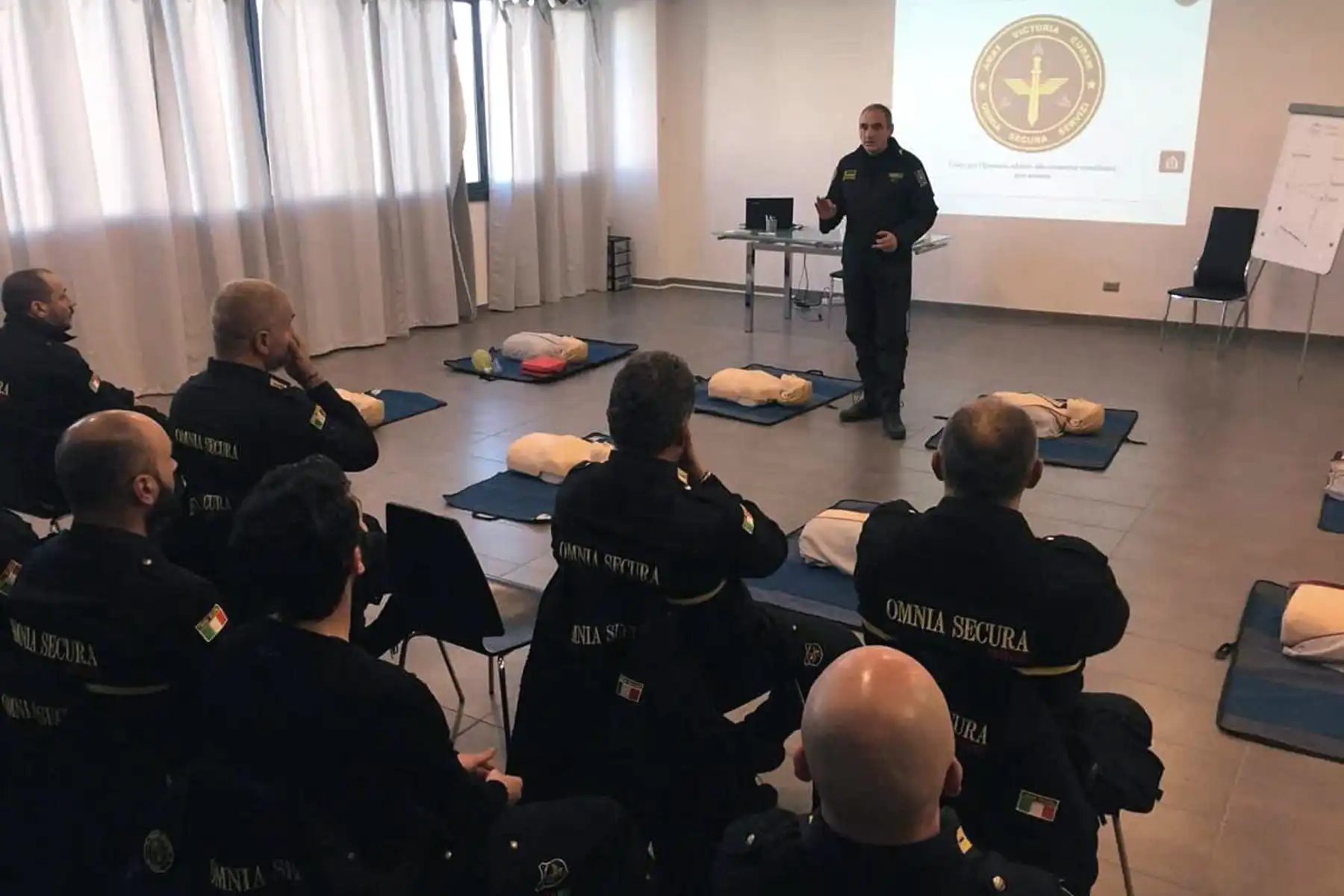
In the modern personal security landscape, the role of the Close Protection First Responder is becoming increasingly vital, particularly when compared to the traditional bodyguard. Historically, a bodyguard (or Close Protection Officer) focused almost exclusively on physical security: close escort, immediate threat management, visible deterrence, and the regulated use of firearms. However, operational reality shows that the likelihood of a protection agent needing to draw a weapon to stop an aggressor is statistically low. In most scenarios, physical presence, meticulous route planning, preventive surveillance, and de-escalation strategies are far more relevant than an armed response.
Conversely, medical emergencies represent a constant and tangible risk in any high-profile scenario. Accidental injuries, sudden trauma, or pre-existing medical conditions can endanger a client’s life, often in environments where access to traditional healthcare is limited or delayed. This is where the Close Protection First Responder excels—a hybrid professional who merges close protection expertise with high-level medical training.
This professional does not just protect the client from physical threats but is capable of providing immediate, advanced medical care, stabilizing critical conditions, and saving lives before hospital transfer is possible. This capability acts as a true “force multiplier” for the protection team. Managing a medical crisis is often more decisive for the client’s survival than the potential need for an armed intervention.
Mandatory Prerequisites
To ensure safety standards and effective international communication, candidates must meet the following requirements:
- Language Proficiency: Fluent communication skills (written and oral) in English.
- Licensing: Possession of a valid Personal Defense Firearms License.
- Vetting: Background checks are mandatory, except for sworn Law Enforcement, Corrections, Licensed Private Security, or Military personnel.
Required Equipment & Technical Gear
- Authorized Weapon Systems
- Type: High-quality, reliable centerfire semi-automatic pistols only.
- Frame Size: Full-size or Compact configurations.
- Permitted Calibers: .380 ACP, 9mm, .357 SIG, .40 S&W, or .45 ACP.
- Strict Exclusions: Revolvers, .22 caliber (rimfire), and “Micro-pistols” (e.g., Glock 42/43, M&P Shield) are strictly prohibited.
- Carry Systems & Duty Gear
- Holster: Rigid Outside-the-Waistband (OWB) only, mounted on the strong side. (Prohibited: IWB, collapsible, or Serpa-style retention).
- Standards: Must fully enclose the trigger guard and allow for one-handed operation.
- Accessories: At least one belt-mounted magazine pouch (single or double) is required.
- PPE & Apparel
- Executive Attire: Full business suit (jacket, tie, trousers, formal shoes) for corporate modules.
- Operational Attire: Tactical trousers, 1.5″ (3.8 cm) rigid belt, casual wear (no jeans), and technical weather gear.
- Protection: Certified ballistic eyewear and active electronic hearing protection.
- Digital Tools: Laptop and smartphone for planning and research phases.
- Logistics: Individual hydration system. Body armor is optional.
Ammunition Specifications
- Estimated Round Count: 100 rounds.
- Steel Target Standards: Exclusive use of lead-core ammunition is mandatory.
- Prohibitions: Brown Tip, Armor Piercing (AP), surrogate rounds, and reloaded/remanufactured ammunition are strictly prohibited.
- Procurement: Ammunition is available for purchase exclusively through OS ACADEMY.
First Person on Scene (FPOS) Core Syllabus
- General Principles: Role of the responder, scene assessment, and chain of survival.
- Primary Patient Assessment: The ABCDE approach and rapid vital sign evaluation.
- Hemorrhage Control: Application of tourniquets, direct pressure, and hemostatic dressings.
- Airway Management: Correct positioning, airway clearance, and use of oropharyngeal adjuncts.
- Respiratory & Circulatory Support: BVM assisted ventilation and shock management.
- Trauma Management: Spinal immobilization, fracture stabilization, and penetrating trauma care.
- Medical Emergencies: Anaphylaxis, Cardiac Arrest (BLS), diabetes, and seizures.
- Transport & Evacuation: Safe casualty movement and coordination with medevac teams.
- Scenario Training: High-stress simulations and Mass Casualty (MASCAS) management.
- Legal & Ethical Considerations: Responsibilities, documentation, and handover protocols.
Course Details
- Student Limit: 12 participants
- Price: € 800.00