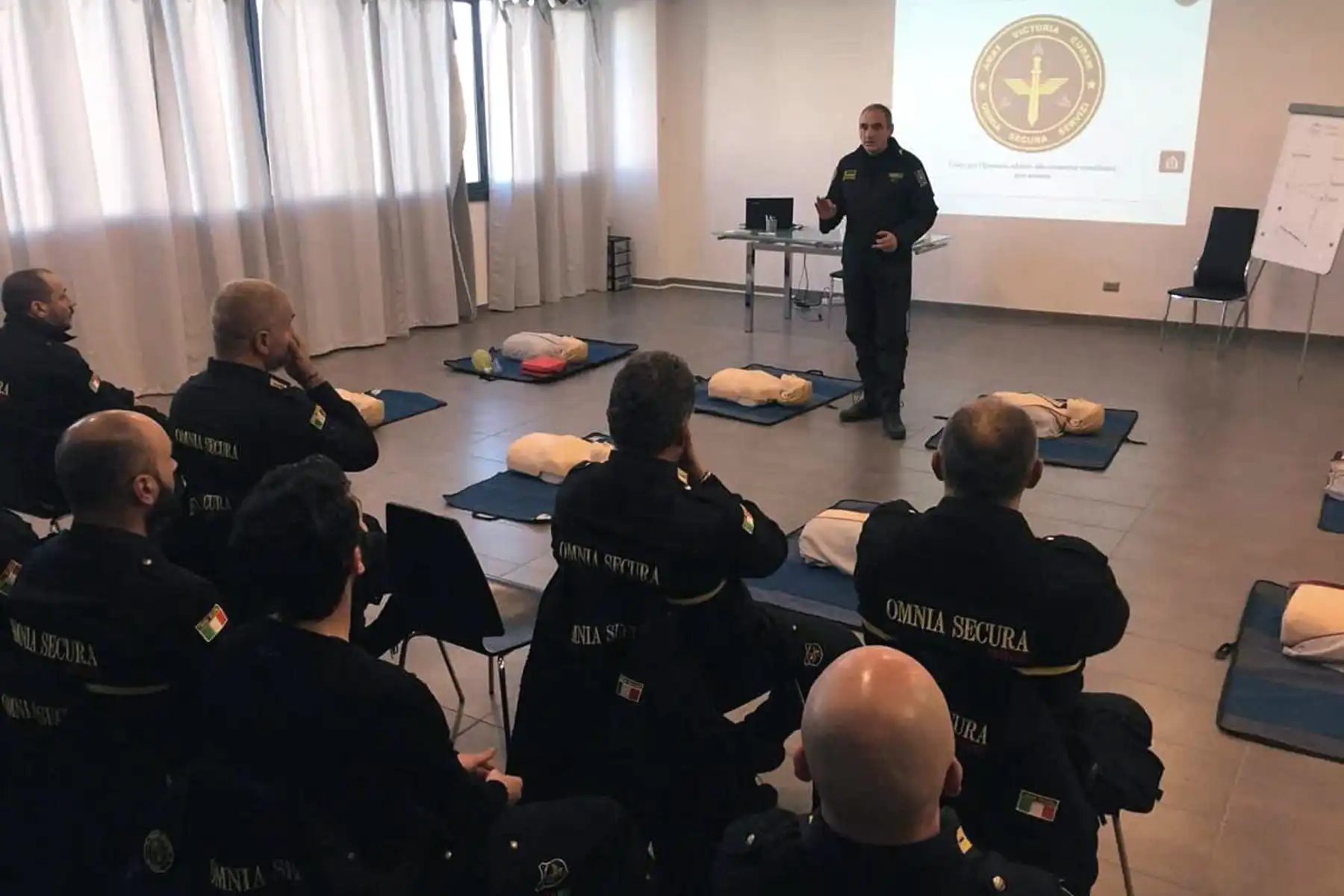
Course for Civilian Personnel and Law Enforcement
Program Overview Tactical Emergency Casualty Care (TECC) is an advanced tactical first aid protocol specifically developed for civilian personnel and law enforcement operating in high-risk scenarios, such as active shooter situations, mass casualty events, terrorist attacks, or hostile environments. Adapted from the military-based TCCC (Tactical Combat Casualty Care), TECC translates battlefield medicine into operational guidelines tailored for the unique legal and environmental needs of civilian contexts.

The primary objective of TECC is to reduce preventable mortality by providing standardized, evidence-based guidelines for those who are first on scene. Participants learn to integrate personal safety with rapid patient assessment and emergency trauma management before advanced medical support arrives. This course prepares responders to make critical, informed decisions in complex scenarios where speed, safety, and adaptability are paramount.
Operational Phases of TECC:
- Direct Threat Care (DTC): Immediate interventions performed while both the responder and the casualty are still exposed to active threats or hazardous conditions.
- Indirect Threat Care (ITC): Patient management in a relatively secure environment (Warm Zone), allowing for advanced hemorrhage control, airway management, and circulatory support.
- Evacuation Care (EVAC): Focused on stabilization, reassessment, and continuous monitoring during transport to advanced care facilities, ensuring effective handover to EMS teams.
While TCCC is designed for combat zones and military medics, TECC targets civilians, LEOs, and private security operating in urban settings. It focuses on tools and protocols compatible with local legislation and the civilian medical chain of survival, representing the natural evolution of tactical medicine for the modern world.
Mandatory Prerequisites
To maintain safety standards and international interoperability, candidates must meet the following:
- Language Proficiency: Fluent communication (written and oral) in English.
- Licensing: Possession of a valid Personal Defense Firearms License.
- Vetting: Background checks are mandatory, except for sworn Law Enforcement, Corrections, Licensed Private Security, or Military personnel.
Required Equipment & Technical Gear
- Authorized Weapon Systems
- Type: Reliable, centerfire semi-automatic pistols only.
- Frame Size: Full-size or Compact configurations.
- Permitted Calibers: .380 ACP, 9mm, .357 SIG, .40 S&W, or .45 ACP.
- Prohibitions: Revolvers, .22 rimfire, and “Micro-pistols” (e.g., G43, Shield) are strictly prohibited.
- Carry Systems & Duty Gear
- Holster: Rigid Outside-the-Waistband (OWB) only, strong-side mounted. (No IWB, collapsible, or Serpa-style holsters).
- Standards: Full trigger guard coverage and one-handed operation capability.
- Accessories: At least one belt-mounted magazine pouch.
- PPE & Apparel
- Operational Attire: Tactical trousers, 1.5″ (3.8 cm) rigid belt, technical weather gear. (No jeans).
- Protection: Certified ballistic eyewear and active electronic hearing protection.
- Logistics: Individual hydration system (Camelbak or similar). Body armor is optional.
Ammunition Specifications
• Estimated Round Count: 30 rounds.
• Steel Target Standards: Lead-core ammunition is mandatory for steel engagement.
• Prohibitions: Brown Tip, Armor Piercing (AP), surrogate rounds, and reloaded ammunition are strictly prohibited.
• Procurement: Available for purchase exclusively through OS ACADEMY.
TECC Core Syllabus
- Introduction and Principles
- History and civilian adaptation of tactical medicine.
- Role of the First Responder in high-risk urban scenarios.
- Chain of survival and priorities in mass-casualty incidents.
- Operational Phases (Detailed Training)
- Direct Threat Care: Safety assessment, DTC hemorrhage control, and rapid casualty extraction.
- Indirect Threat Care: MARCH/ABCDE assessment, advanced tourniquet use, wound packing, and airway adjuncts.
- Evacuation Care: Stabilization for transport and coordination with civilian EMS.
- Specialized Trauma Management
- Control of life-threatening bleeding from limbs, torso, and neck.
- Management of penetrating (gunshot/stab) and blunt force trauma.
- Tension pneumothorax recognition and chest seals.
- Medical & Tactical Integration
- Basic Life Support (BLS) and cardiac arrest in tactical settings.
- Anaphylaxis, seizures, and common field medical emergencies.
- Prioritization of care under extreme stress and time pressure.
- Practical Scenarios
- Realistic multi-casualty simulations.
- Decision-making drills with limited resources.
Course Details
- Student Limit: 12 participants
- Price: € 350.00
TECC GUIDE LINES